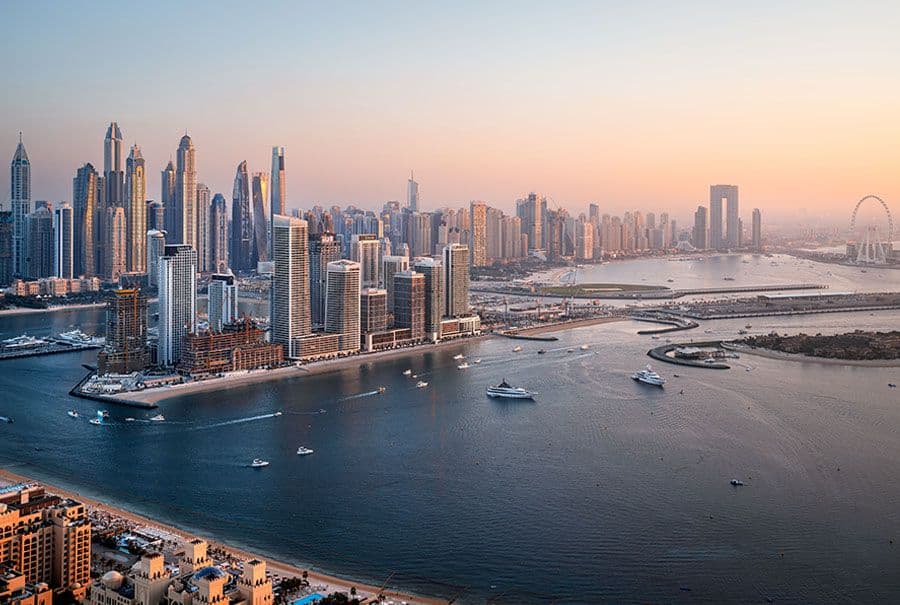


Can Americans Buy Property in the UAE? A Complete Guide for US Investors
Yes, American citizens can legally, easily, and securely purchase real estate in UAE. In fact, United States buyers represent one of the fastest-growing investor demographics in the region’s property market. Driven by zero property tax, dollar-pegged currency stability, world-class safety, and attractive rental returns, thousands of American professionals, retirees, and institutional investors are expanding their real estate portfolios into Dubai.
However, buying property overseas requires navigating foreign ownership laws, transaction steps, currency dynamics, and US tax obligations. This comprehensive guide walks US citizens through everything they need to know before buying in Dubai.

Freehold vs. Leasehold: What Can Americans Own?
Under Dubai Law No. 7 of 2006, foreign nationals—including US citizens—are granted full 100% freehold ownership rights in designated investment zones.
• Freehold Ownership: You own the property and the land it sits on outright in perpetuity. You can sell, lease, renovate, or pass it down to heirs through a registered DIFC will. Premier freehold areas include Downtown Dubai, Dubai Marina, Palm Jumeirah, Dubai Creek Harbour, Dubai Hills Estate, and Business Bay.
• Leasehold Ownership: Grants rights to occupy and use a property for a fixed duration (usually 30 to 99 years), but the underlying land ownership remains with the freeholder. For long-term capital preservation, US investors overwhelmingly favor freehold properties.
Key Financial Advantages for US Buyers
Why are American investors directing capital to Dubai over domestic real estate markets?
1. Zero Property and Capital Gains Tax: Dubai levies 0% annual municipal property tax, 0% capital gains tax on resale profits, and 0% personal income tax on rental yields.
2. AED to USD Currency Peg: The UAE Dirham (AED) has been officially pegged to the US Dollar at a fixed rate of 3.6725 since 1997. US investors face zero foreign exchange volatility or conversion risk when transferring funds.
3. Higher Rental Yields: While major US metros like Miami, New York, or Los Angeles generate net rental yields of 2.5% to 4.5%, prime Dubai properties consistently deliver net yields of 6% to 8.5%.
4. Strong Dollar Purchasing Power: US buyers can deploy strong dollar liquidity into prime off-plan or ready luxury real estate at competitive price-per-square-foot valuations.
Step-by-Step Buying Process for Americans
Acquiring property in Dubai is remarkably streamlined, fully digitized, and can even be executed remotely from the US:
Step 1: Choose Between Off-Plan or Secondary (Resale) Property
Off-plan purchases are bought directly from master developers with interest-free phased construction payment plans. Secondary resale properties are existing homes transferred directly from current owners.
Step 2: Sign the Memorandum of Understanding (Form F) & Deposit
For secondary sales, buyer and seller sign Form F (the unified purchase contract) and the buyer submits a 10% security deposit held in an escrow account.
Step 3: Secure the No Objection Certificate (NOC)
The developer issues an official NOC confirming that all service charges and master community dues are fully cleared.
Step 4: Title Deed Transfer at the Dubai Land Department (DLD)
The transaction concludes at a DLD Trustee Office (or online via DLD digital portal), where the remaining balance and 4% DLD transfer fee are settled, and the official electronic Title Deed is immediately issued in your name.
UAE Golden Visa for US Real Estate Investors
American investors purchasing real estate valued at AED 2,000,000 (~$545,000 USD) or more qualify for the prestigious UAE 10-Year Golden Visa. This renewable residency permit allows you, your spouse, children, and domestic staff to live, work, open local bank accounts, and reside in the UAE without requiring an employment sponsor. Crucially, Golden Visa holders are not subject to minimum stay requirements outside the UAE to keep their visa valid.
US Tax Considerations (IRS Reporting)
While the UAE does not tax your property income or capital gains, US citizens remain subject to worldwide income taxation by the IRS.
American owners must report gross foreign rental income and allowable expenses on IRS Schedule E (Form 1040). Furthermore, foreign bank accounts holding rental proceeds must be disclosed annually via FBAR (FinCEN Form 114) and Form 8938 (FATCA) if aggregate foreign balances exceed statutory thresholds. Consulting a CPA experienced in US-UAE cross-border taxation is strongly recommended.
For international and US investors looking to enter the market with full peace of mind, exploring developments by established UAE builders like BNW Developments offers a direct route to premium freehold ownership. From boutique residences in established Dubai neighbourhoods to high-growth, branded coastal projects across Ras Al Khaimah, BNW Developments delivers Golden Visa–eligible properties designed to meet rigorous global standards.
Frequently Asked Questions (FAQ)
Can I buy property in Dubai remotely without traveling there?
Yes. Many American buyers purchase off-plan properties directly through verified digital developer portals or execute secondary purchases via a notarized Power of Attorney (POA).
Can Americans get a mortgage from a UAE bank?
Yes. UAE commercial banks offer non-resident mortgages to US citizens, typically financing 50% to 60% of the property value subject to standard income verification.