

Buying Property in Dubai from Australia: What You Actually Need to Know
For Australians considering property overseas, Dubai has increasingly entered the conversation. But buying Dubai property as an Australian comes with a very different set of questions from purchasing at home. Can you legally own the property outright? Can the entire transaction be completed from Australia? How much should you budget beyond the purchase price? Can you access UAE mortgage finance? And how will owning an overseas property affect your Australian tax position?
For anyone exploring Dubai property investment for Australians, these practical considerations matter as much as location, price or potential returns. This guide breaks down the process from an Australian buyer’s perspective, covering ownership, remote purchasing, upfront costs, financing, foreign exchange, Australian tax implications and eligibility for the UAE Golden Visa.
Can Australians Legally Own Property in UAE?
Foreign ownership is permitted within designated freehold areas across Dubai and Ras Al Khaimah. These include some of the UAE’s most established residential and investment destinations, as well as emerging areas attracting significant new development:
- Dubai Marina & JBR – established waterfront communities with strong international recognition.
- Downtown Dubai & Business Bay – central residential and commercial districts with access to major business and lifestyle destinations.
- Palm Jumeirah & Dubai Islands – prime waterfront locations associated with luxury residential and hospitality-led development.
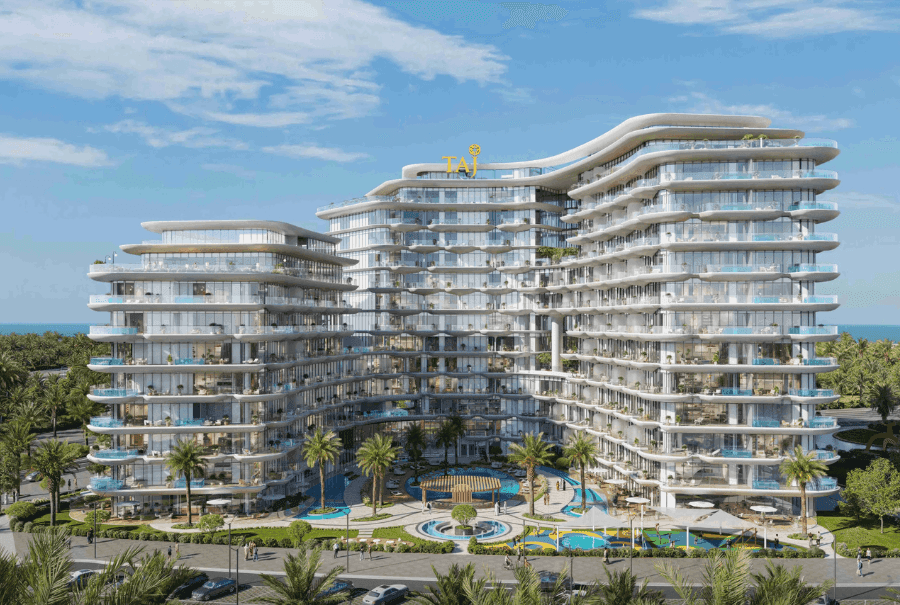
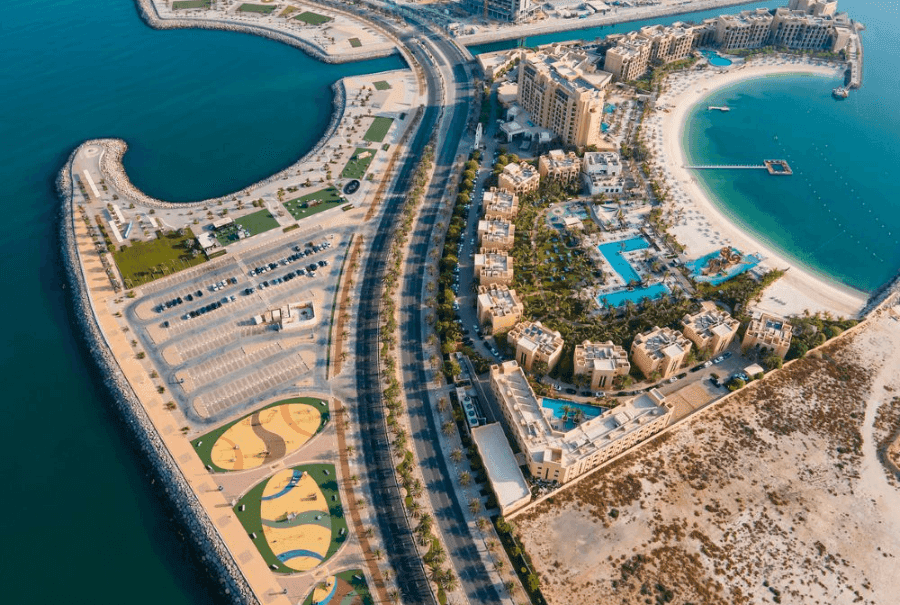
- Al Marjan Island, Ras Al Khaimah – a growing waterfront destination with resorts, branded residences and major hospitality investment. BNW Developments has multiple projects on Al Marjan Island, including Aqua Arc, La Perla and Taj Wellington Mews.
- RAK Central, Ras Al Khaimah – an emerging mixed-use business and residential district where BNW Developments is developing Radisson Blu Hotel & Residences.
The Numbers: Sydney and Melbourne vs. Dubai
For an Australian buyer, comparing Dubai with Sydney or Melbourne requires more than looking at headline yields or purchase costs. The two markets operate under different ownership, financing, taxation and regulatory frameworks. Dubai may offer different investment characteristics, but Australians also need to consider how an overseas asset will be treated under Australian tax law and how factors such as exchange rates, financing and property management affect the overall investment
To see why Australian money is heading into the UAE, look at how the basic numbers stack up against our capital cities:
| What Australian Buyers Should Consider | Buying in Australia | Buying in Dubai / UAE |
| Ownership | Ownership rules vary according to residency and citizenship status. FIRB requirements may apply to foreign buyers. | Foreign nationals can acquire 100% freehold ownership in designated investment areas. |
| Purchase Costs | Buyers may pay state-based stamp duty and other acquisition costs depending on the property, state and buyer status. | In Dubai, buyers typically pay a 4% DLD transfer fee, along with applicable registration, agency and transaction costs. |
| Ongoing Property Costs | Owners may need to account for council rates, strata costs where applicable, and potential state land tax. | There are no annual council rates or local land tax equivalent to Australia, although service charges, maintenance and property management costs may apply. |
| Rental Returns | Returns vary by city, suburb and property type. Sydney and Melbourne have historically recorded comparatively lower gross residential yields. | Certain Dubai communities may offer higher gross rental yields, but buyers should assess the net return after service charges, management fees, vacancy and other expenses. |
| Taxation | Australian tax residents are generally required to declare worldwide income, including income from overseas property. Australian CGT rules may also apply when an overseas asset is sold. | The UAE does not currently impose personal income tax or local capital gains tax on individuals in the same manner as Australia. This does not make a UAE property automatically tax-free for an Australian tax resident. |
| Financing | Buyers generally access the domestic lending system, with borrowing assessed against Australian income, liabilities and credit history. | Non-resident Australians can access mortgages from certain UAE banks, although LTV ratios, documentation requirements and lending criteria can differ from those available to UAE residents. |
| Currency Exposure | A domestic property purchase is generally priced and funded in AUD. | UAE property is priced in AED, meaning Australian buyers should consider AUD/AED exchange-rate movements when transferring deposits, paying instalments or repatriating proceeds. |
| Remote Purchasing | Domestic transactions are generally completed within the Australian conveyancing and settlement system. | Many Dubai property transactions can be handled remotely. Off-plan purchases are largely digital, while completed-property transfers may require a Power of Attorney or approved remote-transfer process. |
| Residency | Purchasing Australian property does not in itself create a separate investment-linked residency benefit for an Australian citizen. | Qualifying UAE property investments may contribute towards eligibility for the 10-Year UAE Golden Visa, subject to current eligibility requirements. |
Important tax note: The UAE tax treatment of a property and the Australian tax treatment of the same investment are two separate considerations. Australian tax residents are generally taxed on worldwide income, which can include rental income and capital gains from overseas property. Buyers should seek independent Australian tax advice based on their individual circumstances.
What Do Australian Buyers Need to Purchase Property in Dubai?
For most Australian buyers, the documentation is relatively straightforward, although the exact requirements depend on whether you are buying off-plan, purchasing a completed property, or applying for UAE mortgage finance.
Passport / ID requirements
For an off-plan purchase, the current process requires a copy of the buyer’s Australian passport when reserving the unit. The Sales and Purchase Agreement can then be completed digitally or by courier.
If buying a completed property remotely
A buyer may need to appoint a representative using a Power of Attorney, with notarisation, authentication/attestation and Arabic translation requirements depending on the transfer method. Some Dubai Land Department trustee offices allow remote video transfers.
Mortgage documentation
Australians applying for UAE mortgage finance may be asked to provide supporting financial documents such as recent Australian bank statements, ATO Notices of Assessment, an Equifax credit report and proof of salary or employment.
UAE bank account:
The Dubai Land Department does not list a UAE bank account as a universal requirement for a non-resident foreign buyer to register a property purchase. However, one may be required or useful depending on the payment method, mortgage lender, developer and ongoing property-management arrangements. Buyers should confirm the specific requirements for their transaction.
Is UAE residency required?
Non-resident Australians can access certain UAE mortgages, which indicates that UAE residency is not necessarily required for financing. However, the exact purchase and banking requirements should still be confirmed for the buyer’s specific transaction.
Can You Buy From Australia Without Flying Over?
You don't need to spend long hours in the air to get a deal over the line. Thousands of overseas investors buy every year entirely from their laptops.
1. Going Off-Plan (Direct from a Developer)
Buying off-plan (under construction) is almost completely digital:
- Reserving the unit: You pick your floor plan, email over a scan of your Australian passport, and wire an initial holding deposit (usually 5% to 10%, Source: RERA Developer Regulations) via bank transfer or credit card.
- Signing the contracts: The developer sends across your Sales and Purchase Agreement (SPA), which you sign digitally via DocuSign or have couriered.
- Oqood Registration: The developer registers the agreement with the Dubai Land Department under the Oqood system (the government’s pre-title registry under Law No. 13 of 2008). Once processed, you receive a digital ownership document complete with a verifiable government QR code.
2. Buying Ready Property (Secondary Resale)
If you are purchasing a completed apartment or townhouse from an existing owner, you will need someone on the ground to sign the transfer at the Dubai Land Department Trustee office. You do this with a Power of Attorney (PoA).
To get a PoA sorted while you're still in Australia:
- Have a lawyer draft a specific real estate PoA restricted strictly to purchasing that single title.
- Sign it in front of an Australian Public Notary.
- Send it to the Department of Foreign Affairs and Trade (DFAT) for an official apostille or authentication stamp.
- Have it attested by the UAE Embassy in Canberra.
- Once your representative in Dubai receives the physical document, they run it through the local Ministry of Foreign Affairs (MOFA) and arrange a legal Arabic translation.
If you don't want to deal with embassy paperwork, the Dubai Land Department also allows remote video transfers through licensed trustee offices, where you verify your identity on a live video call.
The Upfront Costs: What to Budget Beyond the Price Tag
Dubai doesn't hit you with ongoing council rates, but you pay purchase fees upfront at settlement. As a rule of thumb, budget roughly 6.0% to 7.0% on top of your agreed purchase price:
- DLD Transfer Fee: 4.0% of the property purchase price, plus an AED 580 admin fee (Source: Dubai Land Department).
- Buyer Agency Fee: Standard 2.0% broker commission, plus 5.0% UAE VAT on that commission (Source: RERA / UAE Federal Tax Authority).
- Registration Trustee Fee: AED 4,000 (+ 5% VAT) for properties over AED 500,000, or AED 2,000 (+ 5% VAT) for cheaper units (Source: DLD Trustee Fee Schedule).
- Developer NOC Fee (Resale only): AED 500 to AED 5,000 for the master developer to issue a No Objection Certificate confirming the seller owes zero maintenance fees (Source: RERA Guidelines).
- Conveyancer Fee: Roughly AED 5,000 to AED 10,000 if you hire an independent conveyancing firm to manage the transaction.
Mortgages for Non-Resident Australians
You can get a mortgage from UAE retail banks (like Emirates NBD, FAB, or ADCB) while living in Australia, but the lending criteria are tighter than back home:
- Loan-to-Value (LTV): As an expat or non-resident, banks typically cap your borrowing at 50% to 60% LTV (Source: Central Bank of the UAE Mortgage Regulations). That means having at least 40% to 50% in cash equity, plus enough to cover transaction costs.
- Paperwork: You’ll need to show your last two ATO Notices of Assessment, six consecutive months of Australian bank statements, an Equifax credit report, and a letter confirming your current salary.
- Off-Plan Lending: UAE banks generally won't lend on early-stage off-plan projects for foreign non-residents. Banks usually step in only once a building reaches 80% physical completion (Source: CBUAE / Commercial Bank Criteria). Because of this, most Aussies buying off-plan use the developer’s staged payment plan rather than bank finance.
Managing the AUD to AED Exchange Rate
Because the dirham moves in lockstep with the greenback, you are effectively trading AUD against USD. If the Aussie dollar is riding high, Dubai properties get cheaper for you. If the AUD drops against the US dollar, buying the same apartment takes more local cash.
One piece of advice: never wire hundreds of thousands of dollars using standard retail bank exchange rates from CommBank, ANZ, NAB, or Westpac. Their standard FX markups can quietly cost you 2.0% to 3.0% on the spread (Source: ACCC FX Review). Set up an account with a specialist commercial currency broker or institutional FX provider so you can transfer at wholesale interbank rates or use forward contracts to lock in your rate ahead of payment milestones.
The Reality Check with the ATO
Many people assume that because Dubai doesn't tax your rental income or capital gains, that cash is totally tax-free. That is not entirely true.
Australia taxes based on tax residency, not where your assets sit.
The Australia-UAE Comprehensive Economic Partnership Agreement (CEPA) deals with bilateral trade and commerce, not personal taxes (Source: Australian Department of Foreign Affairs and Trade - DFAT). There is no double taxation treaty covering personal income tax between Australia and the UAE (Source: ATO International Tax Treaties Register).
What that means for your portfolio:
- If you live in Australia (Tax Resident): You have to declare every dirham of net Dubai rent on your annual tax return (Source: Section 6-5, ITAA 1997). You can deduct legitimate running costs like service charges, property management fees, repairs, and mortgage interest. But because Dubai charges 0% local tax, you get zero foreign tax credits to offset what you owe the ATO.
- Capital Gains Tax (CGT): When you sell, any capital profit gets converted to AUD and added to your taxable income for that financial year. You still get the standard 50% CGT discount if you hold the deed for longer than 12 months (Source: Division 115, ITAA 1997).
- If you are an expat (Non-Resident for Tax Purposes): If you have cleanly cut ties with Australia under the ATO’s statutory residency rules, your foreign rental income generally stays outside the Australian tax net (Source: Section 6-10, ITAA 1997). Breaking residency requires passing strict tests around your family home, immediate family ties, and the days you spend in the country each year. Never assume you are a non-resident without a written sign-off from an international tax accountant.
Qualifying for the 10-Year UAE Golden Visa
If your purchase price clears AED 2,000,000 (roughly AUD 810,000 to AUD 850,000, depending on current exchange rates), you qualify to apply for the UAE 10-Year Golden Visa (Source: Federal Authority for Identity, Citizenship, Customs and Port Security - ICP).
Why so many Australian families take advantage of it:
- You get the legal right to live, work, and set up businesses in the UAE without needing an employer to sponsor you.
- You can sponsor your husband or wife, children of any age, and domestic staff (Source: ICP Golden Residency Bylaws).
- Normal residency visas expire if you spend more than six months outside the UAE. The Golden Visa waives that entirely. You can stay in Australia all year, and your UAE residency remains active (Source: UAE Cabinet Resolution No. 65 of 2022).
- You can hit the AED 2,000,000 threshold using a single property or by combining a couple of smaller units. Qualifying off-plan properties count toward the total.
Sensible Due Diligence Before You Wire Any Money
Before you send a deposit overseas, stick to four practical rules:
- Only pay into official RERA Escrow Accounts: Under Dubai Law No. 8 of 2007, every off-plan project must have a dedicated, government-monitored escrow account (Source: RERA / DLD). Government inspectors release construction funds to the builder only after verifying physical site progress. If an agent or seller asks you to wire money to a general company account, walk away.
- Look at net yields, not just gross: A glossy brochure promising a 9% yield sounds fantastic until you find out the building has massive maintenance fees. Always check the RERA Service Charge Index on the official Dubai REST app to see the audited annual maintenance cost per square foot before committing.
- Check the building's holiday-let rules: If you plan on earning higher yields through short-term holiday rentals (like Airbnb), make sure the building allows them and budget for the 15% to 20% management fee charged by local licensed operators (Source: Dubai Department of Economy and Tourism - DET).
- Get a will registered: The UAE operates under civil and Sharia-based inheritance principles by default. Non-Muslim foreign owners should register a simple English-language property will through the DIFC Wills Service Centre (Source: DIFC Courts) so their assets pass directly to their family without going through local probate courts.
Explore High-Yield UAE Opportunities with BNW Developments
BNW Developments builds master-planned residential communities and branded waterfront residences across Dubai and Ras Al Khaimah. From prime coastal addresses on Al Marjan Island, including Aqua Arc, La Perla, and Taj Wellington Mews, to urban branded developments like the Radisson Blu Hotel & Residences in RAK Central, each scheme is positioned to tap into both standard long-term tenancy demand and the expanding short-stay holiday let market ahead of major regional milestones like the Wynn resort.
With structured developer milestone payment plans, dedicated non-resident advisory, and direct eligibility for the 10-Year UAE Golden Visa at the AED 2,000,000 threshold (Source: ICP), you can purchase and manage an asset entirely from Australia.
Speak directly with the BNW Developments advisory team to review current launch inventory, projected net rental yields, and remote settlement steps.