

All You Need to Know about Etihad Rail
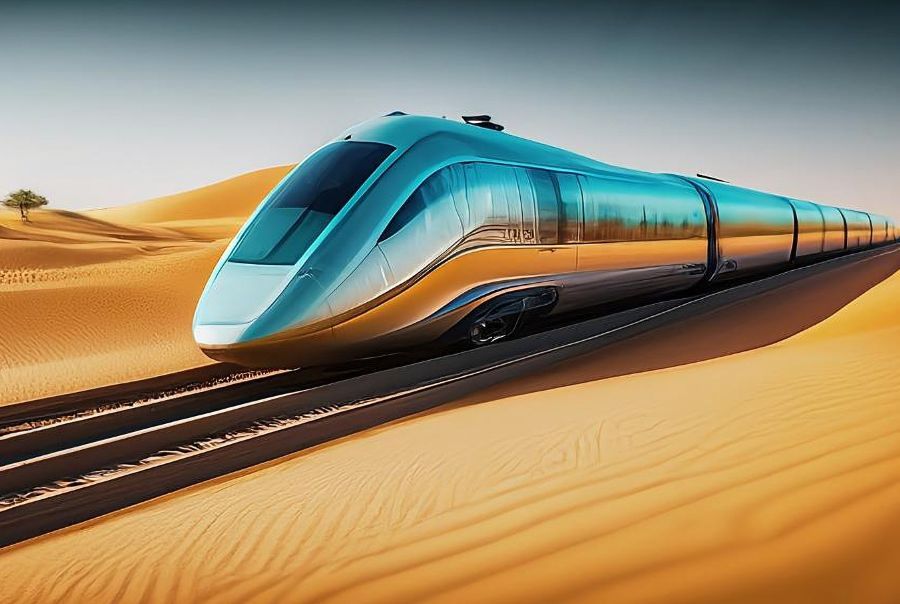
The UAE has long been recognised for its visionary infrastructure, and Etihad Rail stands as a cornerstone of the nation’s transportation network and evolution. Designed to connect the UAE from east to west and link key industrial, commercial, and urban hubs, Etihad Rail is set to transform how goods and people move across the country.
This ambitious rail network not only promises faster, safer, and more sustainable travel but also plays a critical role in boosting economic growth and regional trade. From freight transport to passenger services, the project reflects the UAE’s commitment to innovation, efficiency, and environmental responsibility.
In this space, we will explore everything you need to know about Etihad Rail. From its development phases and route network to its impact on the economy and the environment. Whether you are a daily commuter, business professional, or infrastructure buff, this guide will give you a comprehensive look at one of the UAE’s most transformative projects.
Etihad Rail - An Overview
Etihad Rail is the UAE’s ambitious national railway network, designed to connect key cities, industrial zones, and ports across the country. The project aims to enhance the UAE’s transport infrastructure, support economic diversification, and strengthen regional trade links.
Stretching over 1,200 km upon completion, the network is being developed in multiple phases. Phase One, completed in 2016, focused on freight transport between Shah and Ruwais, primarily moving granulated sulphur from the Shah gas field.
Phase Two, currently under development, will link the UAE’s western and eastern regions, connecting the railway to Saudi Arabia and forming part of the broader Gulf Cooperation Council (GCC) rail network.
Etihad Rail is not only a freight solution but also plans to introduce passenger services, offering faster, safer, and more sustainable travel options for residents and visitors. Its environmentally friendly design aims to reduce road traffic, lower carbon emissions, and improve overall logistics efficiency.
The network supports economic growth by facilitating trade, tourism, and industrial development while creating employment opportunities. With modern stations, cutting-edge signalling systems, and advanced safety protocols, Etihad Rail is positioned as a world-class railway project.
In essence, Etihad Rail represents more than just a transport network. It is a strategic infrastructure initiative that reflects the UAE’s vision for sustainable development, regional integration, and economic resilience. By connecting cities, industries, and communities, Etihad Rail is shaping the future of mobility and commerce in the UAE.
History and Development
Etihad Rail is the UAE’s national railway project, developed to create a modern, efficient, and sustainable transport network connecting the country’s key regions. It represents a major milestone in the nation’s journey toward building a modern, integrated transportation network.
Since its inception, the project has progressed through carefully planned stages, each marking a significant milestone in the UAE’s infrastructure development. Its primary objective is to create a safe, efficient, and sustainable rail system that would support economic growth and reduce reliance on road transport.
Let us look back at the history and development of this highly ambitious project.
2009 – Project Establishment
Etihad Rail was officially established by federal decree to design, build, and operate the UAE’s national railway network. The vision focused on reducing road congestion, enhancing logistics, and supporting long-term economic growth.
2011–2016 – Phase One Development
Construction of Phase One began in 2011, covering a 264-km freight line between the Shah gas field and Ruwais. In 2016, the line became operational, transporting granulated sulphur for export and significantly reducing heavy truck movements and emissions.
2018 – Expansion Plans Announced
Following the success of Phase One, plans for Phase Two were announced, expanding the railway to connect all seven emirates and integrate with the wider GCC railway network.
2020–2022 – Phase Two Construction
Despite global challenges, construction continued, with major progress on tracks linking Abu Dhabi, Dubai, Sharjah, and Fujairah. Advanced signalling systems, bridges, and tunnels were developed to meet international standards.
2023 – Freight Network Completion
The nationwide freight network was completed, enabling seamless cargo transport across the UAE and strengthening trade links between ports, industrial zones, and borders.
Future Outlook – Passenger Services
Etihad Rail is preparing to launch passenger services, elevating the public transportation system and offering fast, safe, and sustainable travel options. These services are expected to transform intercity travel and boost tourism and economic connectivity.
Today, Etihad Rail stands as a symbol of the UAE’s long-term vision for sustainable development, innovation, and regional integration, shaping the future of transportation across the nation. Through steady development and strategic planning, Etihad Rail has evolved into a keystone of the UAE’s infrastructure vision, shaping the future of mobility across the nation.
Etihad Rail Network
The Etihad Rail Network stands as one of the most ambitious infrastructure projects in the country, transforming national transportation and driving economic, social, and environmental progress.
Designed to create a fully integrated railway system across the UAE, Etihad Rail is reshaping how people and goods move within the country and beyond. With world-class engineering, sustainable practices, and strategic connectivity, the network supports the nation’s long-term vision for diversification and regional integration.
Freight Rail Network
From its inception, Etihad Rail’s primary focus has been on freight transport, building a modern and efficient freight rail network that links industrial centres, ports, and key economic zones across the UAE.
Strategic Connectivity
The freight network connects major hubs in Abu Dhabi, Dubai, Sharjah, Ras Al Khaimah, Fujairah, and the Western Region. By integrating with key seaports and industrial facilities, the railway enables faster and more reliable movement of goods.
This connectivity enhances supply chains, supports manufacturing and export activities, and fosters stronger links with regional and global markets.
Economic Efficiency
Rail transport offers significant cost advantages compared to road freight. Trains can carry large volumes of cargo in a single trip, reducing logistics costs, minimising wear and tear on highways, and lowering dependence on trucks.
For businesses, this translates into improved competitiveness and access to new opportunities across the UAE and the broader GCC region.
Environmental Benefits
One of the most compelling advantages of the freight rail network is its positive impact on sustainability. Trains are far more energy-efficient than trucks, producing substantially fewer carbon emissions per tonne of freight transported.
Etihad Rail’s freight services help reduce road congestion, lower fuel consumption, and support the UAE’s environmental goals by shifting a significant portion of freight movement from road to rail.
Safety and Reliability
Rail freight also enhances safety by reducing heavy vehicle traffic on highways. With rigorous operational standards, advanced signalling systems, and well-maintained infrastructure, the network ensures dependable delivery schedules and safe transit of goods across long distances.
This focus minimises accidents, enhances operational efficiency, and builds public trust in the network.
Passenger Rail Network
While the freight rail network laid the foundation, Etihad Rail’s expansion into passenger services marks a new era for public transportation in the UAE.
Comfortable, Efficient Travel
The passenger rail network will be designed to offer a fast, comfortable, and sustainable alternative to road travel.
With modern stations, spacious carriages, and high standards of service, passengers will experience a new way of intercity travel, whether they are commuting for work, exploring the country, or visiting friends and family.
Regional Integration
The passenger network will link major urban centres, enabling seamless travel between Abu Dhabi, Dubai, Sharjah, and other emirates.
This connectivity will enhance social and economic ties, support tourism, and encourage greater mobility across the nation.
Supporting Urban Growth
As cities will continue to expand and populations will grow, efficient public transport will become increasingly essential. Etihad Rail’s passenger services will help reduce traffic congestion, lower travel times, and offer a reliable choice for daily commuters.
By complementing other modes of transport, such as metros, buses, and air travel, the rail network will strengthen the overall mobility ecosystem in the UAE.
Sustainability and Quality of Life
Passenger rail will not only focus on connectivity but will also improve the quality of life. Reducing reliance on cars will help cut emissions, limit urban pollution, and create a more liveable environment for residents and visitors alike.
The network’s role in promoting sustainable mobility will reflect the UAE’s commitment to environmental stewardship and future-ready infrastructure.
Etihad Rail Routes
Etihad Rail’s routes form the backbone of the UAE’s first national railway network, designed to seamlessly connect all seven emirates through a modern, efficient, and sustainable transport system.
Spanning approximately 900 kilometres, the network stretches from Al Sila and Ghuweifat on the Saudi border in the west to Fujairah on the east coast, creating a continuous rail corridor across the country.
The routes link major cities and economic hubs, including Abu Dhabi, Dubai, Sharjah, Ras Al Khaimah, and Fujairah, as well as key regions such as Al Ruwais, Al Mirfa, Al Dhaid, and Al Ain. This extensive coverage ensures strong connectivity between residential centres, industrial zones, ports, and logistics hubs, supporting both passenger travel and freight movement.
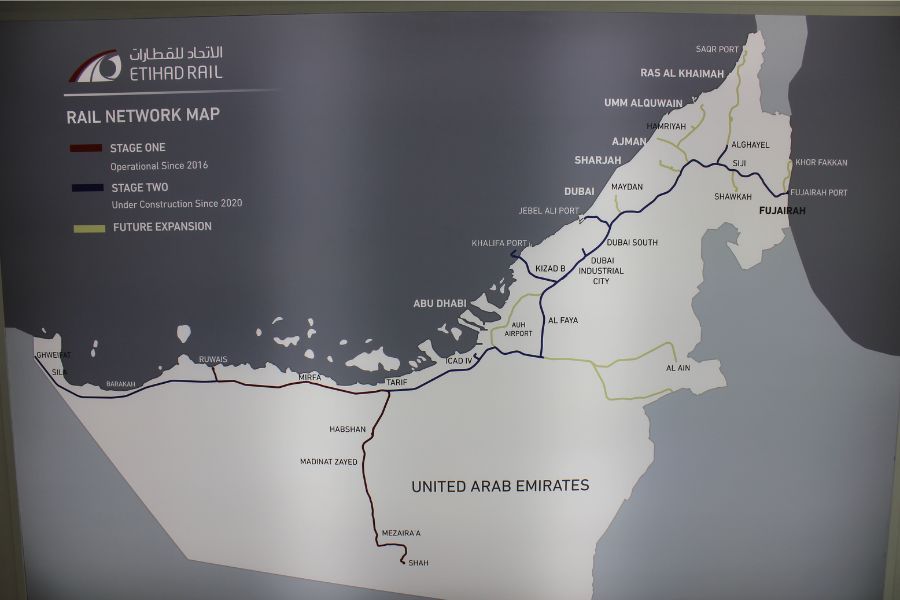
Passenger routes are designed to significantly reduce inter-emirate travel times, offering a fast alternative to road transport. For example, journeys between Abu Dhabi and Dubai are expected to take under an hour. Freight routes, meanwhile, enable the efficient movement of raw materials and goods, reducing reliance on heavy trucks.
Looking ahead, Etihad Rail routes may extend beyond the UAE through regional connections, such as links with Oman, further strengthening trade and mobility across the Gulf. Together, these routes are set to transform how people and goods move across the UAE.
Economic Impact of Etihad Rail
The Etihad Rail project is rapidly transforming the country’s economic landscape, forging new pathways for growth, sustainability, and regional connectivity.
Initially launched as a freight corridor, the rail network now spans most of the UAE, linking industrial hubs, key ports, and major cities. With passenger services set to begin in 2026, the full economic impact of this infrastructure marvel is coming into sharper focus.
One of the most significant contributions of Etihad Rail is its boost to the nation’s GDP. Estimates suggest the railway could contribute up to AED 145 billion to the UAE’s economy over the next 40–50 years, primarily through increased productivity, reduced travel times, and enhanced trade flows.
Beyond long-term GDP growth, the network is poised to generate AED 3.5 billion annually by 2030, reflecting strong economic returns and heightened commercial activity.
Etihad Rail is also a major job creator, with projections indicating over 9,000 new jobs by 2030 across construction, engineering, operations, and logistics sectors. This influx of employment stimulates local industries and supply chains, fostering skills development and broader economic participation.
In addition, improved connectivity boosts tourism, real estate demand near stations, and mixed-use developments, making Etihad Rail not just a transport project but a national engine of sustainable economic diversification.
The environmental benefits further translate into economic value. Rail freight produces up to 80% lower carbon emissions compared to road transport, aligning with the sustainable 2050 goals and yielding substantial savings in fuel and road maintenance costs. This also brings us to our next topic of discussion.
Sustainability and Giving Back to the Environment
The Etihad Rail project is emerging not just as a transformative transport network but also as a powerful champion for environmental sustainability in the country. Central to its mission is reducing the ecological footprint of freight and passenger movement while advancing the UAE’s climate goals.
One of the most significant benefits of Etihad Rail is its potential to dramatically cut carbon emissions. Rail freight emits far less carbon dioxide compared to road transport, up to 80% lower per tonne of cargo, helping reduce the nation’s overall greenhouse gas emissions.
By 2050, rail operations are expected to cut emissions from land transport by around 21%, while taking the equivalent of hundreds of thousands of truck journeys off the road annually.
To further support decarbonisation, Etihad Rail has introduced Carbon-dioxide Emission Avoidance and Reduction Certificates. This is an initiative that quantifies and verifies the environmental benefits companies achieve by using rail over traditional road transport.
These certificates empower businesses to track and report their emissions savings, strengthening corporate environmental stewardship and alignment with national climate regulations.
Beyond emissions, Etihad Rail is implementing sustainability practices across its operations. This includes comprehensive waste management partnerships that ensure responsible handling, recycling, and disposal of materials across its sites, minimising pollution, and conserving resources.
Environmental stewardship also extends to biodiversity and habitat protection. Coordinated efforts with environmental agencies have resulted in relocating native trees, constructing wildlife crossings, and conducting detailed impact assessments to protect ecosystems along the rail corridor.
By integrating eco-friendly technologies, reducing pollution, and promoting sustainable corporate practices, Etihad Rail is setting new standards for infrastructure development that give back to the environment and support long-term ecological well-being.
Current Status and Future Plans
Etihad Rail stands at the forefront of the nation’s transportation transformation, transitioning from a freight-only network to a fully integrated national passenger railway system that will redefine travel across the Emirates.
Current Status
Originally launched with freight operations, Etihad Rail’s national network completed its freight-services rollout in recent years, moving goods efficiently and sustainably across the UAE.
Today, the focus has shifted toward passenger service. Construction of passenger infrastructure is progressing steadily with phased openings planned through 2026. This will include stations in strategic locations such as Abu Dhabi, Dubai, Sharjah, Fujairah and additional stops in Al Sila’, Al Mirfa, and more.
This roughly 900 km nationwide network will connect 11 cities across all seven emirates, offering a modern alternative to road travel and reducing congestion.
Trains are being delivered and certified to international safety standards, with up to 400 seats per train and amenities like Wi-Fi, power outlets, and comfortable, ergonomic designs. Integration with other transport modes, such as buses and ride-hailing services, is also underway to ensure seamless last-mile connectivity.
Future Plans
The passenger service is on track to launch in phases throughout 2026, offering travel between major cities at speeds up to 200 km/h, with journey times of roughly 57 minutes between Abu Dhabi and Dubai. By 2030, Etihad Rail aims to serve over 36 million passengers annually, positioning itself as a linchpin of sustainable mobility in the UAE.
Beyond national transport, future extensions may include regional links, such as connections with Oman and other Gulf countries, enhancing trade, tourism, and economic integration.
In sum, Etihad Rail is rapidly evolving from an ambitious freight project into a transformative passenger network that promises faster, greener, and more connected travel across the UAE and beyond.
To Conclude
Etihad Rail represents far more than a national railway project. It is a pillar for the vision for a connected, sustainable, and diversified future. By linking key cities, industrial zones, and ports, the rail network is redefining how people and goods move across the country, while enhancing efficiency, safety, and reliability.
Its role in supporting economic growth is evident through reduced logistics costs, improved trade flows, and the creation of new employment opportunities across multiple sectors.
Equally important is Etihad Rail’s strong commitment to sustainability. By shifting freight and passenger transport from road to rail, the project significantly lowers carbon emissions, reduces fuel consumption, and eases congestion on highways.
These environmental benefits align closely with the UAE’s long-term climate and sustainability goals, reinforcing the country’s leadership in responsible infrastructure development.
In essence, it is not just a railway for today, but a lasting investment in the UAE’s future, shaping how generations to come will live, work, and connect.
FAQs
Which emirates and major cities will the Etihad Rail network connect?
Etihad Rail’s national railway network will span approximately 900 km across all seven emirates of the United Arab Emirates, linking key urban centres, industrial zones, and strategic regions from Al Sila in the west to Fujairah on the east coast.
The rail system will serve 11 major cities and regions, including Abu Dhabi, Dubai, and Sharjah, along with important hubs such as Al Ruwais, Al Mirfa, Al Dhaid, Fujairah, Ras Al Khaimah, and Al Ain. It also extends to Ghuweifat near the Saudi border and, through planned regional links like the Hafeet Rail project, Sohar in Oman, fostering broader Gulf connectivity.
The network’s integration will dramatically improve inter-emirate travel, reduce reliance on road transport, enhance logistics and freight movement, and support a multimodal transport ecosystem across the UAE.
When will Etihad Rail passenger services begin operations?
Etihad Rail’s passenger services are scheduled to begin operations in 2026 as part of the rollout of the UAE’s first national passenger railway network. While an exact day or month hasn’t been officially announced yet, the overall launch year of 2026 has been reaffirmed by Etihad Rail and industry sources.
The new service will initially connect major cities across the UAE, linking key hubs such as Abu Dhabi, Dubai, Sharjah and Fujairah, before expanding to serve all 11 cities planned on the network.
This passenger rollout represents a major shift from the network’s current freight-only operations toward a comprehensive public rail system designed to enhance inter-emirate mobility and support the country’s sustainable transport goals.
How will Etihad Rail support economic growth and job creation in the UAE?
Etihad Rail will support economic growth in the UAE by improving connectivity between emirates and enhancing the efficiency of freight and passenger transport. By reducing logistics costs and travel times, the rail network strengthens supply chains and supports key sectors such as manufacturing, trade, tourism, and construction.
The project also creates significant job opportunities, from infrastructure development and engineering during construction to long-term roles in operations, maintenance, safety, and customer service.
Additionally, improved mobility enables easier access to jobs and markets, while the shift to rail supports sustainable growth, attracting investment and boosting long-term economic resilience.
How will Etihad Rail help reduce road congestion and improve safety?
Etihad Rail will help reduce road congestion by shifting a significant share of passenger and freight traffic from highways to rail. With reliable, high-capacity trains connecting major cities and industrial hubs, fewer private vehicles and heavy trucks will be needed on UAE roads, easing traffic during peak hours and lowering wear on road infrastructure.
The rail network will also improve road safety by reducing the number of long-distance truck journeys, which are more prone to fatigue-related accidents. Trains operate on dedicated tracks with advanced signalling, automated control systems, and strict safety standards, making rail transport one of the safest travel modes.
Together, these factors lead to smoother traffic flow, fewer accidents, and safer, more efficient transportation across the UAE.
Will Etihad Rail connect with other transport systems, such as metros and buses?
Yes, Etihad Rail is designed to integrate with other transport systems, including metros, buses, and local transit networks across the UAE. Passenger stations will be strategically located to enable smooth connections with city metro lines, public bus services, taxis, and ride-hailing platforms.
This multimodal approach will make it easier for passengers to complete journeys without relying on private cars. The integration aims to create a seamless travel experience, allowing commuters and travellers to move efficiently between intercity rail and urban transport systems.
By linking Etihad Rail with existing public transport infrastructure, the UAE is promoting convenient, sustainable mobility while reducing congestion and improving accessibility across emirates.